About Black Glass Tissue
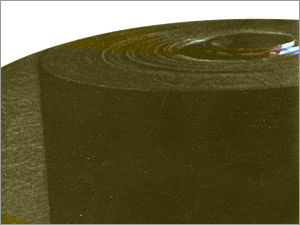
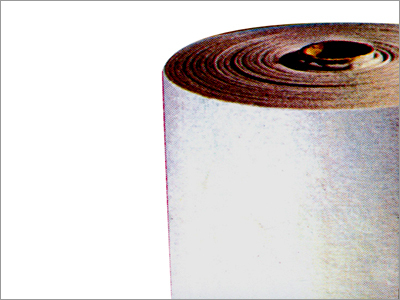
Black Glass Tissue With the support & dedication of our skilled workforce, we have been able to manufacture and import an impeccable quality range of Black Glass Tissue. The glass tissue is made by using finest quality fiber in compliance with international standards. Our quality inspectors have checked the tissue on certain parameters. Black Glass Tissue is widely appreciated for its features such as high heat resistance, durability and standard quality.
Further Details:
Black Tissue is a black non-woven felt made of randomly oriented glass fibres distributed in a special binder by a wet-lay process.
Applications: Minimizes fibre fall-out from nsulation materials in various applications. Imrpoves finsih quality and look and ease handling of insulation material. Particularly suitable for internal building applications where externals urface of insualtino is visible. Elasticity of tissue allows flexing of insulation substrate to ease application fo final product.
Technical Specifications
Nominal Mass
| 60 g/m2
| Standard width
Standard Roll Length
| 1.2 mtrs.
|
Nominal Thickness
| 0.4 mm
|
| 300 mtrs &
|
Fire Rating
| Class 1
|
| above
|
Exceptional Thermal and Electrical PropertiesBlack Glass Tissue combines outstanding electrical insulation with superior thermal resistance, making it an ideal solution for high-voltage and high-temperature environments. Its single-layer glass fiber construction delivers a breakdown voltage above 3.5 kV and withstanding temperatures up to 600C, providing reliability in critical installations such as cables and FRP components.
Versatile Sizing for Diverse Industrial NeedsAvailable in customizable sizes up to 1000 mm in width and thicknesses between 0.09 mm and 0.25 mm, Black Glass Tissue accommodates various project requirements. This adaptability makes it suitable for manufacturers, installers, and service providers handling projects with specific spatial or design constraints.
Simple Installation and Usage GuidelinesBlack Glass Tissue is designed for easy integration into electrical and industrial systems. Installers can apply it using resin or adhesive based on application demands, ensuring durable wrapping or insulation. Detailed instruction can optimize performance and ensure long-lasting results in both small-scale and large-scale settings.
FAQs of Black Glass Tissue:
Q: How is Black Glass Tissue applied in electrical insulation projects?
A: To install Black Glass Tissue, apply the material using a suitable resin or adhesive tailored to your application. It is typically wrapped or layered onto cables, equipment, or FRP components, ensuring secure insulation and optimal dielectric performance.
Q: What are the primary benefits of using Black Glass Tissue in cable wrapping and FRP industries?
A: The main benefits include high dielectric strength (breakdown voltage above 3.5 kV), robust heat resistance (up to 600C), low thermal conductivity, and customizable dimensions. These features make it effective for enhancing safety, durability, and performance in advanced electrical and FRP applications.
Q: When should Black Glass Tissue be chosen over traditional insulation materials?
A: Select Black Glass Tissue when your project requires high-voltage insulation (up to 11 kV), superior thermal performance, and resistance to extreme temperatures. Its low heat conductivity and adaptability for custom sizes make it a preferred choice for demanding industrial environments.
Q: Where is Black Glass Tissue predominantly utilized in India?
A: This material finds widespread use in Indias electrical insulation sector, particularly in cable manufacturing, FRP industries, substations, and industrial plants where enhanced thermal and electrical safety is essential.
Q: What is the process for customizing the size of Black Glass Tissue?
A: Manufacturers and suppliers offer Black Glass Tissue in customizable widths (up to 1000 mm) and thicknesses (0.09 mm to 0.25 mm). Clients simply specify their dimensional requirements when placing orders, ensuring the product fits their project precisely.
Q: How does Black Glass Tissue ensure low thermal conductivity and fire resistance?
A: The glass fiber composition provides a thermal conductivity of less than 0.04 W/mK, greatly reducing heat transfer. Additionally, the materials inherent resistance allows it to withstand temperatures up to 600C, providing protection against heat and fire in electrical applications.






 Send Inquiry


 Send Inquiry
 Send Inquiry
 Send SMS
 English
 Spanish
 French
 German
 Italian
 Chinese (Simplified)
 Japanese
 Korean
 Arabic
 Portuguese