About Fiberglass Tissue
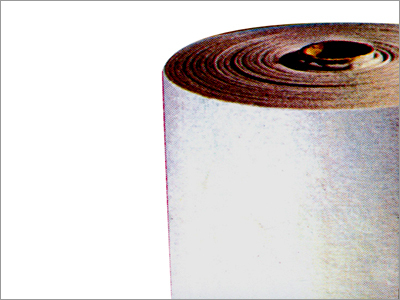
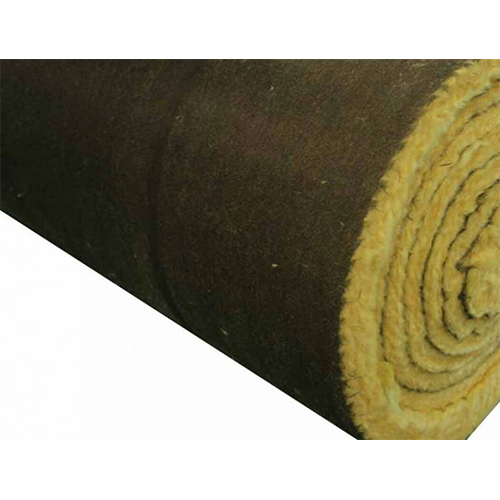
Fiber Glass Tissue Paper
With the help of our distinguished professionals, our company has been able to mark its strong presence in the market as one of the well known manufacture and importer of Fiber Glass Tissue. The glass tissue is extensively used in water proofing, treatment of under ground pile lines and inner & outer wrap. Our offered range of Fiber Glass Tissue Paper is appreciated in the market due to thermal conductivity, durability and heat resistance features.
Further Details:
FGT Series fiberglass tissue is a non woven felt made of randomly oriented glass fiber distributed in a special binder by a wet-lay process.
Applications
Fiberglass tissue paper is available in a variety of densities. Serves as a wrap for both underground and overground pipeline systems to counter natural and artificial corrosion.
Benefits
Serves both a reinforcement and protect system. Compatible with bitumen, asphalt and coal tar enamels. Superior Strength characteristics due to londitudinal reinforcement with glass yarn.
Technical Specifications
| FGT 41/10
| FGT 45/10
| FGT 50/10
|
Nominal Mass (+- 2 gms):
| 41 g/m2
| 45 g/m2 | 50 g/m2 |
Minimum Tensile Strength
Longitudinal
| 2277 N/m
|
Transversal
| 700 N/mm
|
Reinforcement Pitch (approx.)
| 10 mm
| 10 mm
| 10 mm
|
Standard Width
| 1000 mm, 330 mm and 200 mm
|
Roll length
| 300 m, 500 m & 1000 m
|
Exceptional Insulation and StrengthEngineered to deliver low heat conductivity and high voltage resistance, our fiberglass tissue offers unmatched insulation. Its impressive tensile strength further guarantees dependable reinforcement, making it a versatile solution for a range of industrial and electrical applications.
Quality and CustomizationWe provide fiberglass tissue in standard 12 m rolls, with customizable size options to meet diverse requirements. Our products are manufactured to ensure a smooth, uncoated finish, maintaining flexibility for varied installation scenarios.
Comprehensive Support and SupplyAs a leading manufacturer, distributor, exporter, supplier, and service provider in India, we offer complete assistancefrom expert product guidance to reliable supply chains and tailored service. Our commitment extends across importing and trading to ensure accessible solutions nationwide.
FAQs of Fiberglass Tissue:
Q: How should fiberglass tissue be applied for optimal reinforcement?
A: For the best results, apply the fiberglass tissue using a suitable adhesive or resin. Ensure the tissue is properly aligned during installation to maximize its reinforcing and insulating properties. This process helps integrate the tissue securely with the substrate.
Q: What are the main benefits of using this fiberglass tissue in construction and electrical projects?
A: This fiberglass tissue offers excellent electrical insulation (breakdown voltage above 2 kV/mm), low thermal conductivity (0.035 W/mK), and strong mechanical properties. It enhances durability, provides thermal insulation, and contributes to electrical safety in various installations.
Q: When is it appropriate to use fiberglass tissue over other reinforcement materials?
A: Choose fiberglass tissue when you require high-temperature resistance (up to 550C), superior electrical insulation, and a lightweight solution with good mechanical strength. It is especially suitable for applications where smooth surface integration and low heat transfer are crucial.
Q: Where can this fiberglass tissue be utilized?
A: This product finds extensive use in thermal and electrical insulation, surface lamination, air and liquid filtration, roofing, and as a reinforcement layer in composites or construction panels. Its versatile properties make it suitable for both industrial and domestic settings.
Q: What process is recommended for installing fiberglass tissue for insulation purposes?
A: Begin by cleaning and preparing the substrate. Lay the tissue flat, ensuring there are no creases. Use an appropriate adhesive or resin for bonding, then apply pressure to remove air pockets and secure the tissue firmly. Allow adequate curing time for best results.
Q: What makes this fiberglass tissue a beneficial choice for thermal insulation?
A: Primarily, the tissues low thermal conductivity (0.035 W/mK) minimizes heat transfer. Its single-layer construction and ability to withstand high temperatures (up to 550C) contribute to maintaining energy efficiency and protecting sensitive components.





 Send Inquiry


 Send Inquiry
 Send Inquiry
 Send SMS
 English
 Spanish
 French
 German
 Italian
 Chinese (Simplified)
 Japanese
 Korean
 Arabic
 Portuguese